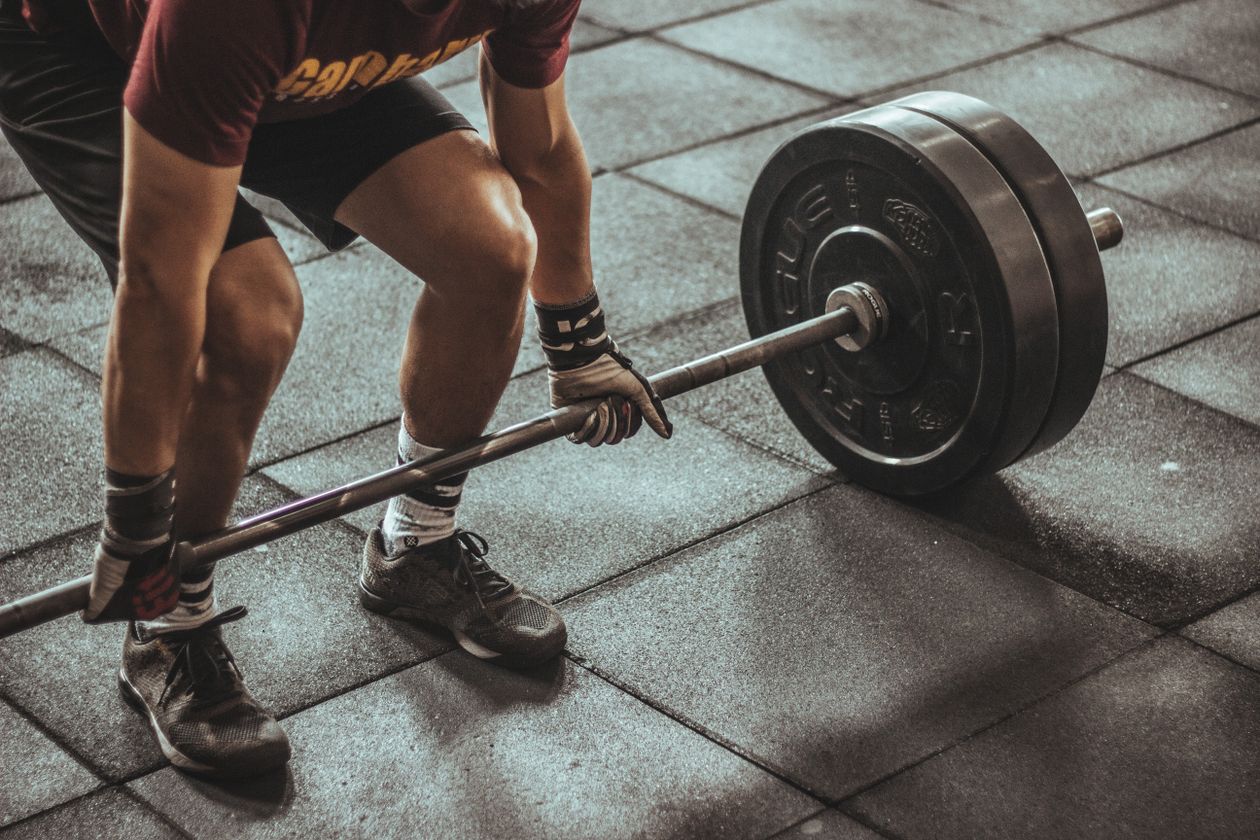
If you are new to strength training, the fitness world can feel overwhelming: push/pull/legs, bro splits, supersets, drop sets. Here is the truth most coaches will tell you privately — beginners get the best results from the simplest plan: full-body workouts, three times a week, built on a handful of fundamental movements.
This guide gives you exactly that. No gym membership politics, no 2-hour sessions. Just a clear plan for your first 8 weeks.
When you are new, your muscles recover fast and your biggest gains come from practice — learning to squat, hinge, push and pull with good form. A full-body routine trains every major muscle group 2–3 times per week, which means more practice, more frequent growth stimulus, and faster skill development than hitting each muscle once a week.
It is also forgiving. Miss a day? You still trained everything twice that week. That flexibility is why full-body plans have the highest adherence among beginners.
Every exercise you will ever do is a variation of six patterns. Learn these and you can walk into any gym with confidence:
Rest 60–90 seconds between sets. Choose weights that feel challenging but allow clean form on every rep.
Do Workout A on Monday, a slightly varied Workout B on Wednesday (swap goblet squat for leg press, row for lat pulldown), and repeat A on Friday. That is the whole program.
Progression is simple: when you hit the top of the rep range with good form on all sets, add a small amount of weight next session (2.5–5 lb / 1–2 kg for upper body, 5–10 lb / 2–4 kg for lower body). Keep a simple log — phone notes are fine. If you cannot add weight, add a rep. Progress is progress.
Muscles grow between sessions, not during them. Protect your rest days, aim for 7–9 hours of sleep, and expect soreness in weeks 1–3 — it fades as your body adapts. Sharp or joint pain is different from soreness: pain means stop and get assessed.
Eight weeks of this, done consistently, will build more strength and confidence than a year of program-hopping. Master the basics first — the fancy stuff can wait.
Programs, recipes and services to accelerate your transformation.
See the shop Training
No commute, no crowds, no excuses. A complete 30-minute full-body home session — plus how to keep making it harder as you get stronger.
Read article → Training
Push/pull/legs, upper/lower, bro split — what they actually mean, who each one is for, and how to match your split to the days you really have.
Read article → Training
No, you cannot crunch it away. Here is the honest hierarchy — deficit, protein, strength, walking, sleep — that actually shrinks the waistline after 35.
Read article →Ready-made training spreadsheets built by a certified coach — pick your goal and follow the plan, no consulting needed. Plus diet and recipe ebooks.
See the shop AMERICAN TRAINER INSTITUTE